Like a Phoenix from the Ashes
Yeats will offer investors the opportunity to buy value-for-money workspace units for rental investments and start-up businesses to both rent and purchase.

At Yeats, sustainability isn’t a line item we add to a marketing brochure after the building’s designed. It’s embedded in how we think about development from the very first feasibility study.
The commercial property sector is under increasing pressure to deliver on ESG commitments, and rightly so. Buildings account for a significant share of the UK’s carbon emissions, and occupiers, investors, and regulators are all demanding higher standards. Greenwashing won’t cut it anymore. The market wants proof — and increasingly, it wants proof that’s baked into the asset from inception, not retrofitted after completion.
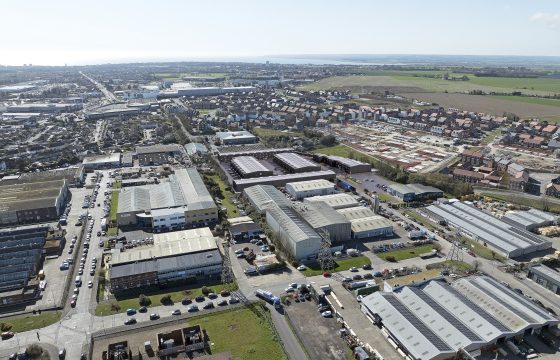
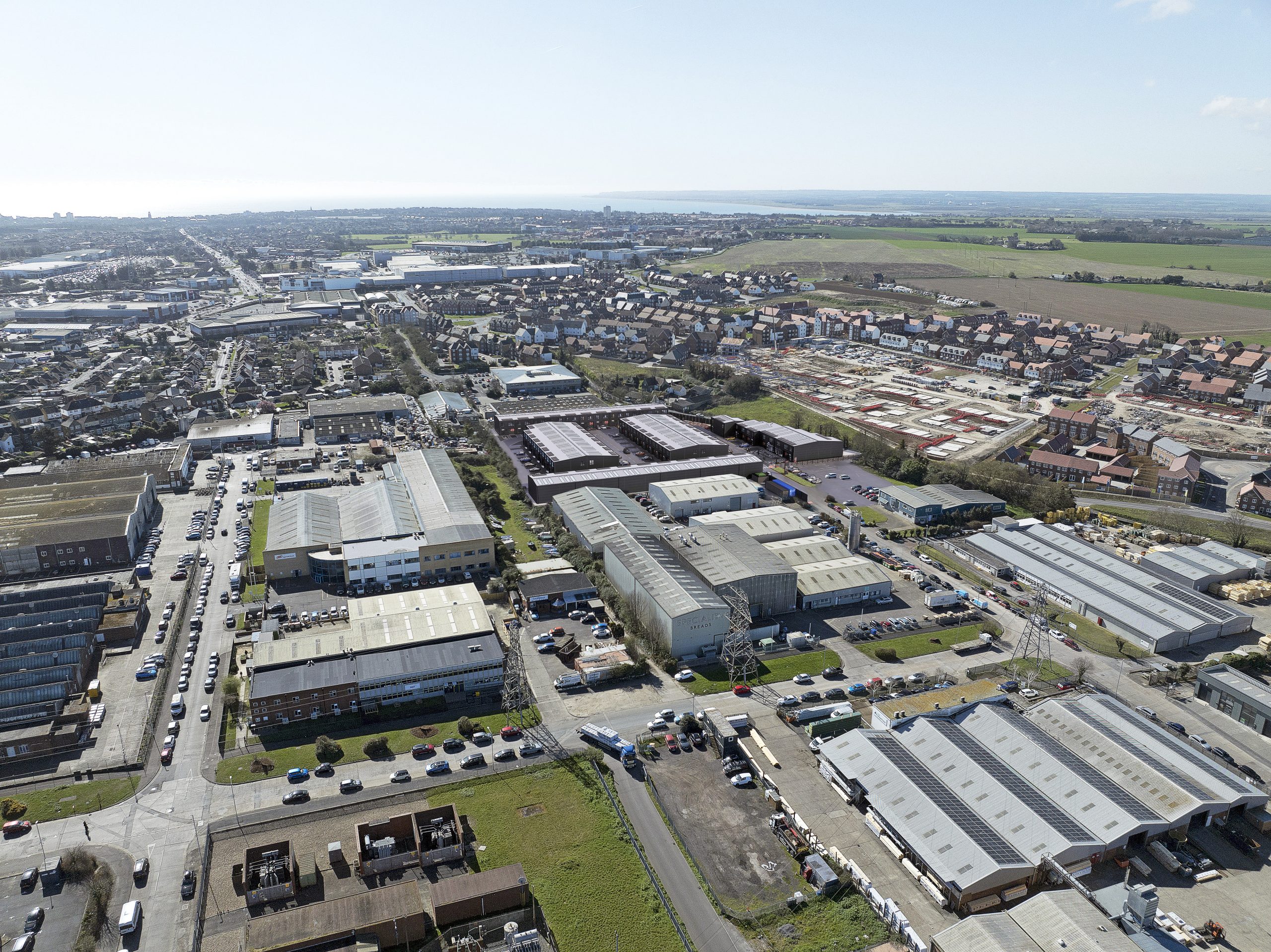
That’s how we approach every Yeats scheme. At Engine Works Park, our 126,000 sq ft development in Thanet, the ESG strategy started with the structural design itself. Efficient use of materials, responsible sourcing, and construction waste reduction programmes minimise embodied carbon before a single occupier moves in. The split-level unit design maximises usable space per square metre of land — an efficiency play that reduces the environmental cost of development without compromising on what occupiers actually need.
Operationally, our buildings are equipped with energy-efficient envelopes, LED lighting throughout, and provisions for EV charging infrastructure. We design for the standards that occupiers and institutional investors will demand over the next decade, not just the benchmarks that apply today.
The social dimension matters too. Every Yeats development creates employment — during construction and through the businesses that operate from our parks. Engine Works Park is located in Margate, a town undergoing genuine regeneration, and the scheme contributes directly to local economic growth, employment diversification, and the provision of modern workspace that can attract and retain skilled workers.
For our investment partners, including Nimol, the ESG credentials are increasingly relevant to asset valuation and exit strategy. Institutional capital is flowing towards assets that can demonstrate genuine sustainability performance. Regulatory requirements around energy efficiency ratings are tightening. A new-build asset with embedded ESG principles is positioned to command premium valuations as the market evolves — and to avoid the stranded asset risk that’s beginning to affect older stock.
We’re building to last — structurally and environmentally. Because the best commercial developments aren’t just good investments. They’re responsible ones.